When twenty-three entrepreneurs walked into NXT GEN Labs in Lilongwe’s Area 47 on 29 April, 2026, they carried with them more than business plans. They carried months of rigorous training, the weight of their communities’ livelihoods, and a conviction that climate-smart agribusiness is not a distant aspiration for Malawi: it is something being built right now by people like them.
By the end of the day, seven of those enterprises had been selected to advance to the next phase of the Advancing Sustainable Entrepreneurship and Livelihoods Development (ASELD) Project, where they will receive targeted support and investment recommendations from GIZ under the result-based financing mechanism. It was a result that underscored the ambition at the heart of the program and the very real potential sitting inside Malawi’s emerging agribusiness sector.

Pic 1: Participants discuss amongst themselves during the pitch event
The pitching event marked the end of ASELD’s first training phase, a structured program implemented by Emerge Livelihoods through its Emerge4Biz flagship initiative, in partnership with German Development Cooperation through the GIZ MIERA III program. Forty-five entrepreneurs completed capacity strengthening training, which focused on improving enterprise efficiency across the agriculture value chain: boosting food production, strengthening nutrition outcomes, and building the climate resilience that Malawian businesses increasingly cannot afford to go without.
From that cohort, twenty-three were advanced to the next stage, where they presented enterprises and business plans before an audience of investors, development partners, and ecosystem stakeholders. The selection process was rigorous. The pitches, by all accounts, were impressive.
“While not everyone progressed to the final stage, the transformation across the group was evident; businesses became more structured, more digital, and more climate-conscious. Many participants walked away with improved systems, stronger brands, and a renewed sense of direction. With Phase One successfully reaching the Southern and Central regions through virtual delivery, the project now looks ahead to Phase Two, aiming to extend this impact to the Northern region and continue building a more resilient and innovative agribusiness ecosystem. What we witnessed today was not just a competition; it was proof of concept. These entrepreneurs have absorbed the training, applied it to real business challenges, and come back with solutions that are commercially viable and genuinely climate-responsive. Malawi’s agribusiness future is in capable hands.” – Giddess Msowoya – Investment and Portfolio Analyst (Emerge Livelihoods)

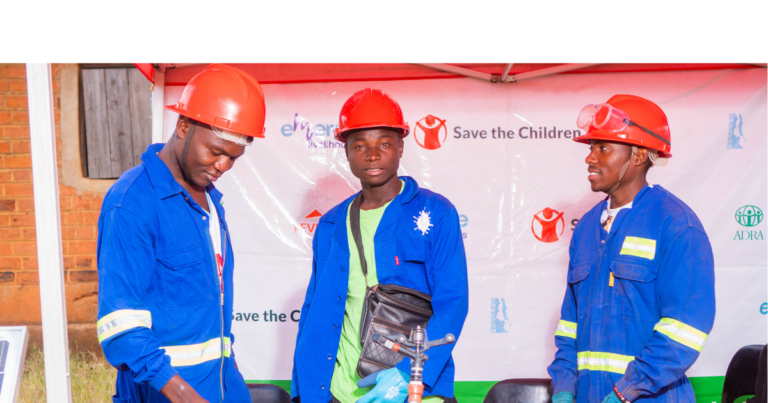
Pic 2: Chisomo (standing) celebrates after being named as one of the finalists.
The enterprises that took to the floor showcased solutions spanning the breadth of Malawi’s agriculture value chain, including innovations in food production, post-harvest handling, nutrition-sensitive processing, and climate-adaptive farming practices. Each enterprise reflected the program’s core thesis: that building resilient enterprises and building food-secure communities are not competing goals, but the same goal pursued from different angles. After deliberation, the panel identified seven enterprises whose ideas, strategies and entrepreneurial commitment stood out. These are the enterprises now advancing to the next phase, where they will be recommended for the Results-Based Financing.
The seven selected enterprises
| Founder | Enterprise Name | Gender |
| Ruth Navaya Msiska | TCL investments | Female |
| Sylvester G Chiweza | Fert Carbo | Male |
| Mercy Okota | Lumbadzi Farms | Female |
| Moses Kunsanja | Wow industries | Male |
| Lucy Lambwe | Uptread General Dealers | Female |
| Chisomo Saukira | Farming 4 Passion | Female |
| Blessings Mlelemba | Big2Project | Male |
For these seven enterprises, the next phase brings structured investment support and formal recommendation by GIZ, a significant credential for any green business navigating Malawi’s investment landscape. But program leaders are equally clear that all twenty-three participants left the event with something valuable: visibility, connections and the confidence that comes from having stood up and made the case for their business in front of people who matter.
This program is designed to create linkages that last beyond any single event. We want these entrepreneurs connected to the ecosystem, to investors, to mentors and to each other because that network is what sustains a business long after the formal program ends. We want to see them grow and navigate the impacts of climate change while addressing challenges in their communities. This program is creating impact and transforming livelihoods for Malawians.
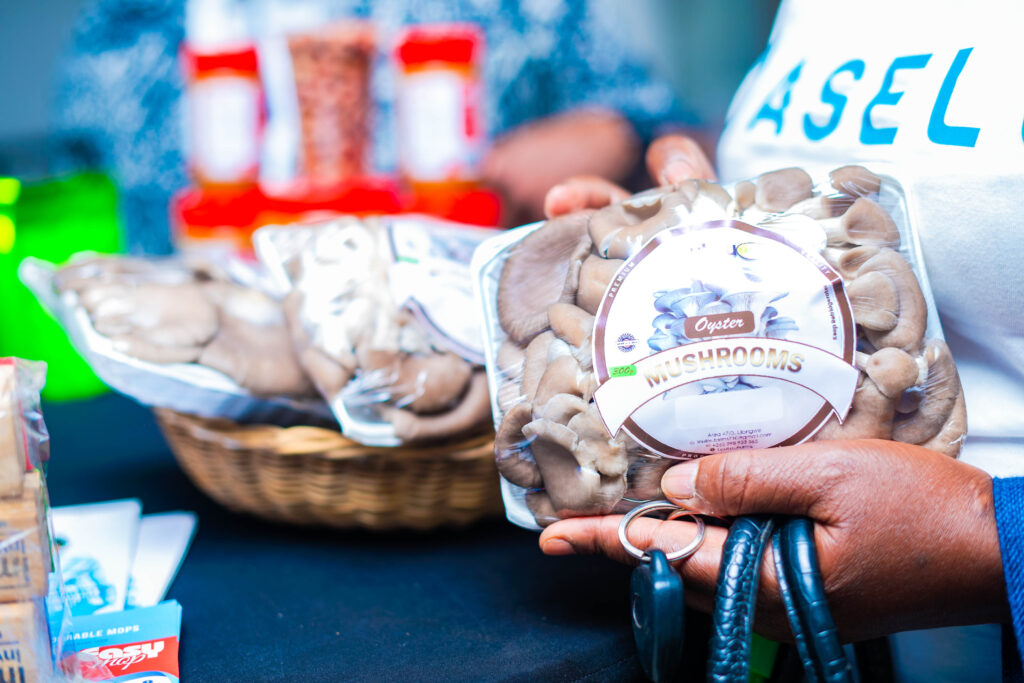
Pic 3: One of the products on display during the pitch event
The ASELD project sits within a broader ambition to foster inclusive economic growth through enterprise development in Malawi’s agriculture sector. Its focus on climate preparedness reflects a recognition that the businesses most likely to thrive in Malawi’s future are those being built today with an eye on changing weather patterns, shifting growing seasons and the increasing pressure on rural livelihoods that climate change brings.
For Emerge Livelihoods, the pitch event was a milestone but not a finish line as another cohort of smart agribusiness enterprises are expected to be selected in the second cohort of the project. The seven selected enterprises move forward. The wider cohort remains part of the ecosystem. And the work of building Malawi’s next generation of agribusiness leaders continues.
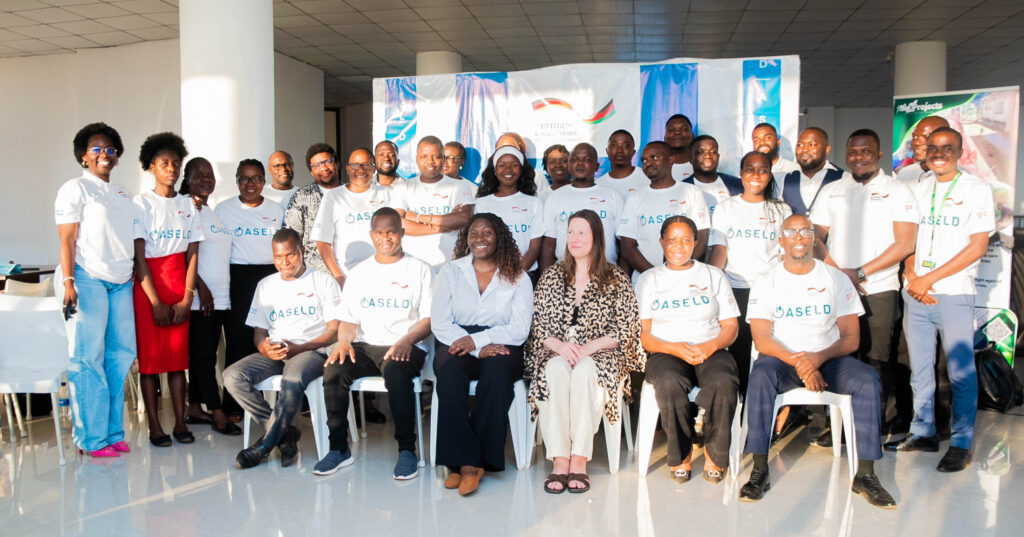
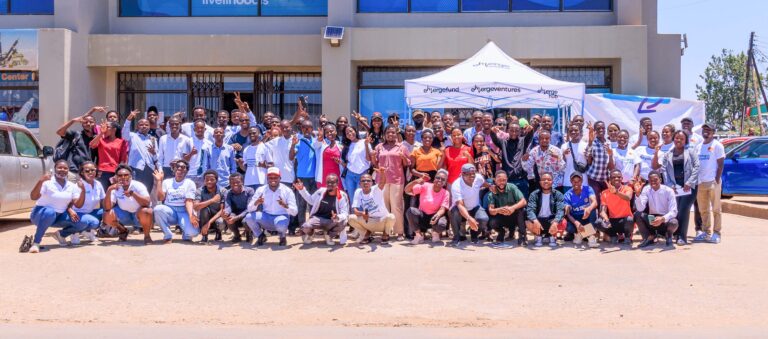
Pic 4: Enterprise Founders pose for a group photo with officials from Emrege Livelihoods and GIZ
The ASELD Project’s purpose is to support and grow 125 agribusiness enterprises across Malawi by equipping them with the right skills, knowledge, and confidence to navigate an increasingly complex business environment. Implemented in two phases, the project goes beyond traditional training by focusing on real-world challenges such as climate change, shifting markets, and the growing importance of digital tools. During the first phase, held between February and April 2026, 45 entrepreneurs took part in a learning journey that covered key areas including financial management, digital entrepreneurship, business model refinement, leadership, and climate resilience.
The ASELD Project is implemented by Emerge Livelihoods through the Emerge4Biz program, in partnership with German Development Cooperation through the GIZ MIERA III program.